

When budgets tighten, the first instinct is often to pull back on marketing. It feels like the safe move. But history tells a different story.
Companies that stay visible and continue marketing through downturns tend to come out stronger once the economy rebounds. The key is not to spend more, but to spend smarter.
Here are five proven, budget-conscious marketing strategies that help brands stay top of mind, strengthen customer loyalty, and grow even in uncertain times.
1. Content Marketing That Solves Immediate Problems
High-value content becomes one of your most efficient tools when budgets shrink. The focus should shift from aspirational ideas to practical solutions that address the challenges customers face right now.
Review your current content. How much of it answers questions such as “How can I save money on X?” or “What is the most cost-effective way to handle Y?”
Content that solves real problems builds trust and positions your brand as a helpful partner, not just a seller.
2. Retention Marketing Optimization
Keeping existing customers becomes even more valuable when times are tough. Acquiring a new customer typically costs five to seven times more than retaining one, and that gap often widens in a recession.
Ways to strengthen retention include:
- Segment customers by vulnerability to economic pressures
- Offer loyalty perks or exclusive benefits
- Create lower-cost options so customers can “trade down” without leaving
- Reach out proactively to at-risk accounts
- Adjust loyalty programs to deliver immediate value
3. Strategic Partnerships to Extend Reach
Partnerships allow you to expand your reach without increasing your marketing budget. Look for complementary businesses that serve a similar audience but do not compete directly.
Through partnerships you can:
- Share costs for joint campaigns
- Cross-promote to each other’s audiences
- Bundle products or services for greater value
- Share market insights
- Collaborate on distribution or logistics
4. Micro-Targeted Marketing to High-Value Prospects
Mass marketing becomes less efficient in a downturn. Narrow your focus to the prospects most likely to buy and deliver long-term value.
This approach involves:
- Identifying traits of your most profitable customers
- Building detailed profiles for each segment
- Crafting tailored messages for each audience
- Choosing the most efficient channels to reach them
- Tracking results closely and reallocating resources quickly
5. Refining Your Value Proposition for Recession Relevance
During periods of growth, marketing often highlights aspiration and lifestyle. In a recession, customers want proof of value. Your messaging should emphasize:
- Immediate return on investment
- Cost savings compared to alternatives
- Reduced risk and greater security
- Flexibility and adaptability
- Essential features over extras
You do not need to lower your prices. Instead, make it clear how your solution helps customers achieve more with less.
Measuring What Really Matters Right Now

Traditional metrics can mislead during a recession. Focus instead on indicators that reflect resilience and long-term value, such as:
- Retention rates by segment
- Share of wallet from existing customers
- Cost per acquisition compared to lifetime value
- Conversion rate improvements from current traffic
- Depth and frequency of content engagement
These numbers show whether your marketing is building stability that will last beyond the downturn.
The Hidden Opportunity in a Downturn
Every recession reshapes the competitive landscape. When others scale back, they leave space in the market. Businesses that remain visible and relevant can capture both market share and customer loyalty that endure long after recovery.
Your 30-60-90 Day Recession Marketing Plan
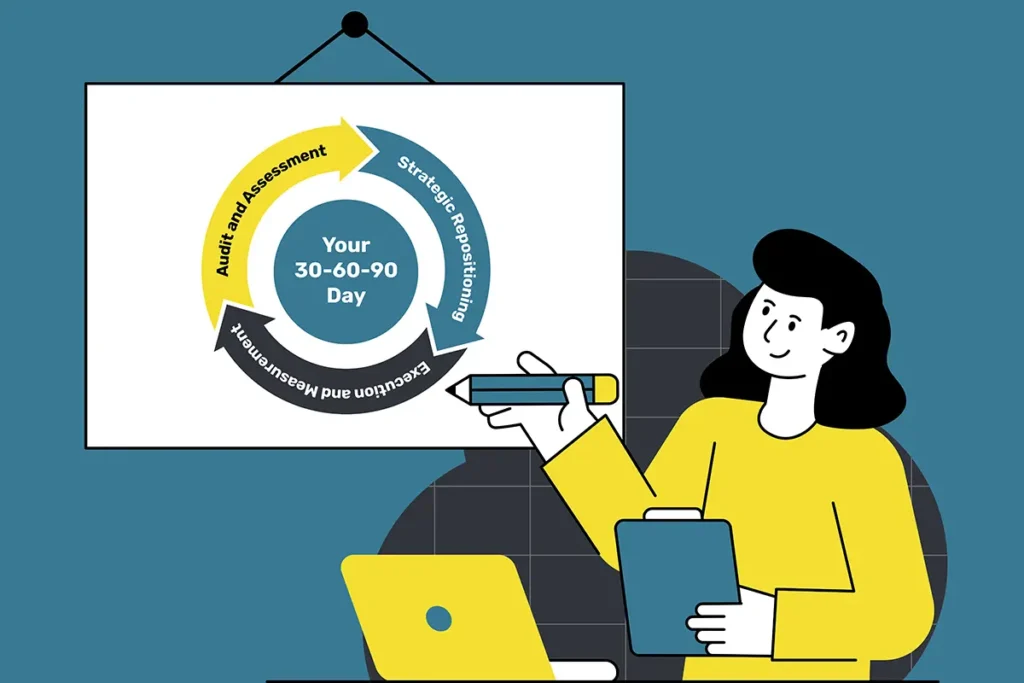
First 30 Days: Audit and Assessment
- Review performance using recession-relevant metrics
- Segment customers by vulnerability and value
- Identify the highest-ROI channels
Days 31–60: Strategic Repositioning
- Refine messaging to highlight recession-relevant value
- Reallocate budget toward direct response marketing
- Develop proposals for two or three potential strategic partners
Days 61–90: Execution and Measurement
- Launch a content plan focused on current customer challenges
- Roll out retention programs for high-value segments
- Review results weekly and adjust budgets immediately if needed
Take the First Step Before the Storm Passes
Every day you delay is another day your competitors could be stepping into the space you leave behind. Do not wait for the economy to recover to rebuild your presence. Start now with one focused action, whether that means auditing your current strategy, launching a high-value content campaign, or reaching out to a potential partner.
When the market rebounds, you will not be starting over. You will already be ahead.