
Here’s a scenario that probably sounds familiar. Someone finds your website, pokes around for a few minutes, and leaves. A few weeks later they’re back, reading a blog post. Then they download something. Then they disappear for a month. Then they book a call.
Random series of events? Not even close. That’s the customer journey playing out in real time, and if your content isn’t built around it, you’re leaving a lot of deals to chance.
So What Actually Is the Customer Journey?
The customer journey is the path someone takes from first realizing they have a problem to deciding to solve it with you. It’s not a straight line. It’s not always fast. And it rarely looks the same twice.
But it does have stages, and understanding those stages is what separates content that actually does something from content that just sits on your website collecting dust.
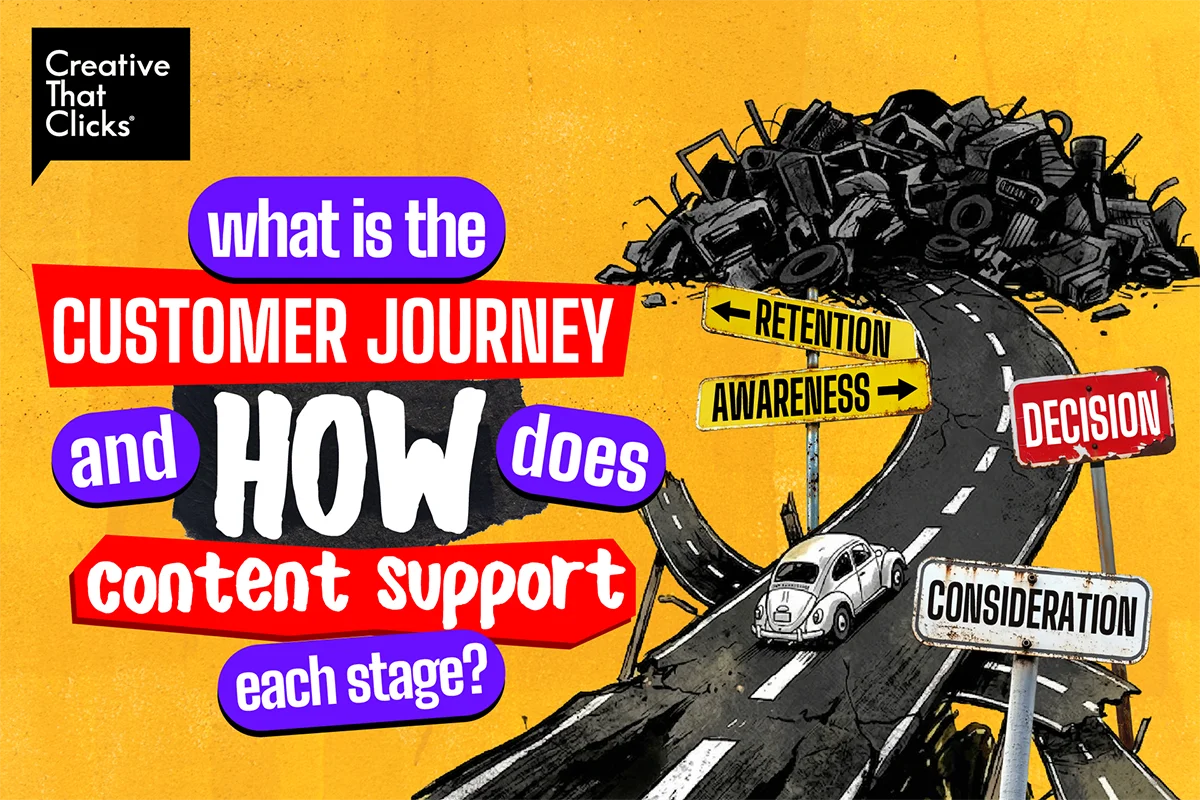
Most frameworks break it into three core phases: awareness, consideration, and decision. Some add a fourth for retention. All of them matter, and each one calls for a completely different kind of content.
Stage 1: Awareness (They Have a Problem, But Maybe Don’t Know It Yet)

At the top of the journey, your future customer is feeling a pain point but might not have a name for it yet. They’re not searching for solutions. They’re searching for answers. “Why is our sales cycle so long?” “Why does our website traffic keep dropping?” “Why can’t we seem to hold onto clients?”
This is where content has to meet people where they are, not where you want them to be. Nobody at this stage wants to read a product page. They want to feel like someone gets it.
What works here:
- Blog posts that address common problems in your industry
- Short-form social content that names a frustration before offering a reframe
- Educational videos or podcasts that build trust without asking for anything in return
Start here: Make a list of the five questions your best clients were asking before they knew they needed you. Write a piece of content that answers each one honestly, no pitch attached.
Stage 2: Consideration (They Know What They Need, Now They’re Comparing Options)

This is where things get interesting. Your prospect has done enough digging to know they need help. Now they’re figuring out who to trust with it.
Content at this stage needs to do two things: show that you actually know what you’re talking about, and help them make a smarter decision, even if that decision turns out not to be you. That last part sounds counterintuitive, but it builds the kind of credibility that quietly closes deals.
What works here:
- Comparison guides and buyer’s guides
- Case studies that show real results with real context, not just glowing testimonials
- Webinars or long-form content that goes deep on a topic
- Email sequences that educate over time instead of just nudging people to book a call
Start here: Look at the last five deals you closed and write down every question that came up during the sales process. Those questions are content briefs. Write the pieces that would have answered them before the first call even happened.
Stage 3: Decision (They’re Ready to Buy, They Just Need a Push)

By the time someone reaches the decision stage, they’ve already done most of the work. They’ve researched, compared, and probably have you on a short list. The content job here isn’t to educate anymore. It’s to remove friction and build confidence.
A lot of companies go quiet on content at this point, assuming the sales team takes it from here. But the right piece of content at the right moment can be the difference between a signed contract and a “we decided to go in a different direction” email.
What works here:
- Case studies with specific numbers and outcomes, not vague success stories
- Testimonials that speak to hesitations, not just results
- ROI calculators or clear pricing breakdowns
- FAQ pages that address the objections prospects actually have, not the ones you wish they had
Start here: Ask your sales team what the most common reason is that deals stall or fall apart. Then build a piece of content that speaks directly to that hesitation. Drop it into your proposal follow-up sequence and watch what happens.
Stage 4: Retention (The Journey Doesn’t End at the Sale)

This stage gets skipped more than any other, which is a little wild when you think about it. Keeping a client costs a fraction of what winning a new one does, and happy clients are your fastest path to referrals, case studies, and expanded contracts.
Retention content isn’t about selling. It’s about making sure clients feel supported, informed, and confident that they made the right call working with you.
What works here:
- Onboarding emails and resources that set expectations early
- Newsletters that offer real value without always asking for something
- Educational content that helps clients get more out of your service
- Check-in touchpoints that feel personal rather than automated
Start here: Map out the first 90 days of your client experience and find where communication tends to go quiet. That gap is where a simple, helpful email could make a bigger impression than you’d expect.
How Do You Figure Out What Your Customer Journey Actually Looks Like?
Here’s the thing: the customer journey isn’t something you invent. It’s something you uncover. Your buyers are already taking it whether you’ve mapped it or not, so the goal is to get curious about what’s actually happening instead of guessing.
A few ways to start:
- Talk to your best clients. Ask them how they found you, what they were searching for before they did, and what almost made them choose someone else. You’ll hear the same things over and over, and that repetition is your map.
- Ask your sales team. They’re living inside the consideration and decision stages every day. They know what questions come up, what objections slow deals down, and what finally gets someone to say yes.
- Look at your data. What pages do people visit before they convert? What emails get opened? What content shows up in your closed deals? The answers are already in your CRM and analytics, they just need someone to go looking.
- Pay attention to the people who didn’t buy. Lost deals are some of the most useful data you have. If someone got to the proposal stage and walked away, find out why. That answer is almost always a content opportunity.
You don’t need a perfect picture before you start. You just need enough to be intentional. Build from there and keep refining as you learn more.
Why This All Matters for Content Marketing
Most businesses create content the way they play scratch tickets. Throw enough out there and hope something hits. The customer journey gives you a way to be intentional instead of random.
When you know what stage your audience is in, you know what they actually need from you. You stop writing blog posts nobody asked for and start creating content that moves people forward. You stop guessing and start building something that works even when you’re not in the room.
Content marketing without the customer journey is just publishing. Content marketing built around it is a system that runs whether or not you’re paying attention.
Let’s Explore Content Marketing Together!
Not sure what content you actually need at each stage? Absolute Studios helps B2B companies build content strategies that map to the way their buyers actually make decisions.