
I’m going to let you in on something I’ve seen hundreds of times with clients – most businesses either waste money on ineffective marketing or starve their growth with tiny budgets.
Here’s the fix: Choose the right budgeting method for your specific situation. After working with hundreds of businesses, I’ve identified six approaches that work – and exactly when to use each one.
The 6 Marketing Budget Methods: Which One Is Right For Your Business?
1. Goal-and-Task Method
Perfect for: Growing businesses that know what they want
This is my favorite approach. Start with real goals, then work backward to figure out what it’ll cost to hit them.
For example: “We need 100 new customers this quarter. Our site converts at 2%, so we need 5,000 qualified leads. At $10 per lead, that’s a $50,000 budget.”
Why I love it: It connects every dollar to actual business results, not arbitrary percentages.
The catch: You need decent data and realistic expectations.
2. Percentage of Revenue Method
Great for: Established businesses with predictable cash flow
Set aside 5-12% of your gross revenue for marketing, depending on your industry and growth goals.
Some rough guidelines I’ve seen work:
- B2B Software: 8-12%
- E-commerce: 7-10%
- Professional Services: 6-8%
- Manufacturing: 3-5%
Why it works: It scales naturally with your business and keeps investment consistent.
The downside: It can hold you back during growth phases or keep you spending during slowdowns.
3. Competitive Analysis Method
Best for: Businesses in crowded markets
Do your homework on what competitors are spending using tools like SEMrush, Ahrefs, and Facebook Ad Library.
Pro tip: Don’t just match their spending—make sure their strategy is actually working first!
Why it works: Keeps you from being dramatically outspent in competitive spaces.
The problem: You’re always following, never leading.
4. Available Budget Method
Use when: You’re a cash-strapped startup (temporarily!)
Use whatever’s left after the essential bills are paid, but set some rules so you don’t permanently underinvest.
Smart move: Commit to bumping up your marketing budget by a set percentage each quarter as revenue grows.
Why it kinda works: It’s better than no marketing at all.
The issue: You’re treating marketing like leftover money, not a priority investment.
5. Co-op/Partnership Method
Works for: Retailers with good manufacturer relationships
Leverage those manufacturer co-op advertising dollars, but don’t let them box in your strategy.
Smart approach: Use those co-op funds as your foundation, then add your own budget for brand-building activities.
The limitation: You’re stuck with manufacturer messaging and timing.
6. Zero Budget Method
Right for: Absolutely no one (unless you’re closing shop)
Sure, skipping marketing might save cash short-term, but it kills your long-term growth.
Hard truth: Businesses that don’t invest in marketing grow 76% slower and fail 43% more often within three years. Yikes.
The Modern Budget Reality: Digital vs. Traditional Split
Here’s how I’m seeing marketing budgets split as recently as 2024:
- Digital Advertising: 45-60%
- Content Marketing: 15-25%
- Traditional Advertising: 10-20%
- Events/Trade Shows: 8-15%
- Marketing Technology: 5-10%
- PR/Influencer: 5-10%
Red Flags: How to Know You’re Doing It Wrong

You’re Probably Overspending If:
- Your marketing budget tops 15% of revenue (unless you’re a startup in growth mode)
- You can’t track ROI for half or more of your marketing spend
- You’re cutting essential operations to fund marketing
- It costs more to acquire a customer than they’re worth over their lifetime
You’re Definitely Underspending If:
- Your marketing budget is under 3% of revenue
- You haven’t increased marketing while watching competitors grow
- Your sales team is constantly complaining about lead quality or quantity
- You’re relying entirely on referrals and hoping for the best
The Smart Budget Framework: 4 Steps to Get It Right

Step 1: Know Your Numbers
- What’s a customer worth to you over their lifetime?
- What can you afford to spend to acquire one? (Usually 20-30% of their lifetime value)
- What are your monthly/quarterly revenue targets?
- What are your historical conversion rates?
Step 2: Pick Your Method
- Growing business with decent data? Go with Goal-and-Task
- Established, stable business? Percentage of Revenue makes sense
- In a cutthroat market? Try a hybrid of Goal-and-Task + Competitive Analysis
Step 3: Build in Some Flexibility
- Keep 20% of your budget for testing new channels and ideas
- Review and adjust quarterly (or more often if needed)
- Create some “surge capacity” so you can double down on what’s working
Step 4: Track Everything That Matters
- Marketing qualified leads (MQLs)
- What it costs to acquire a customer through each channel
- Return on ad spend (ROAS)
- How different marketing touchpoints contribute to conversions
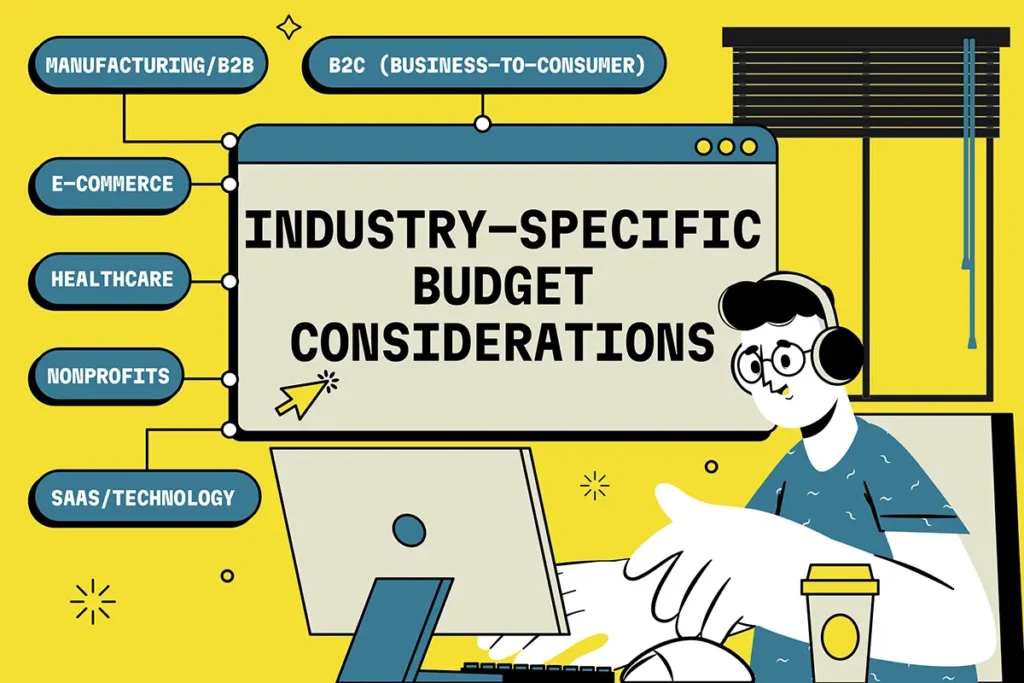
Industry-Specific Budget Considerations
SaaS/Technology
You’ll need higher initial investment (10-15% of revenue), with a focus on content marketing and free trials. Remember those long sales cycles need sustained investment.
E-commerce
Expect to spend heavily on paid advertising with seasonal ups and downs. Product launches need their own dedicated budgets.
Manufacturing/B2B
Trade shows and industry publications still work well here. Be patient with ROI given the long sales cycles, and consider account-based marketing for those high-value prospects.
Nonprofits
With lean budgets, you need high ROI from every dollar. Focus on storytelling, donor engagement, and community impact. Plan around grant funding and Giving Days, and find the right balance between brand awareness and fundraising ROI.
B2C (Business-to-Consumer)
Higher volume, lower ticket size means you need broad reach and consistent brand presence. Lean into social media, influencer partnerships, and video content. Emotional appeal and strong visual branding drive conversions, and you’ll need to be nimble to respond to trends.
Healthcare
You’re dealing with strict compliance and messaging guidelines. Split budgets between patient education, reputation management, and community outreach. Digital presence (especially SEO and local listings) is critical, and ROI can be tricky to track due to long decision cycles.
Common Budgeting Mistakes (And How to Fix Them)
Mistake #1: Set-and-Forget Budgeting
Don’t just set it and forget it. Review and adjust quarterly based on what’s actually working.
Mistake #2: Ignoring Seasonal Patterns
Plan your budget around your business’s natural cycles instead of spreading it evenly.
Mistake #3: Not Budgeting for Testing
Always set aside 10-20% for trying new campaigns and channels. How else will you find the next big winner?
Mistake #4: Mixing Brand and Performance Marketing
Track and budget separately for awareness vs. conversion campaigns – they have different goals and metrics.
Your Marketing Budget Action Plan
This Week:
- Figure out what percentage of revenue you’re currently spending on marketing
- Calculate what it costs to acquire a customer through each channel
- Honestly assess what you can and can’t track ROI-wise
This Month:
- Choose the budgeting method that makes sense for where your business is right now
- Set up proper tracking for all your marketing activities
- Create a quarterly review schedule and stick to it
This Quarter:
- Test at least one new marketing channel
- Shift your budget based on what’s performing
- Start planning next year’s marketing budget using your chosen method
The Bottom Line on Marketing Budgets
The “right” marketing budget isn’t about following what everyone else does – it’s about matching your investment to your growth goals and market reality. Whether you’re spending $1,000 or $100,000 a month, what matters is strategic allocation and relentless measurement.
Marketing isn’t a money pit – it’s the fuel that grows your business. Treat it like an investment, not an afterthought.
Struggling to figure out the right marketing budget for your business?
My team works with you to make the most of your marketing budget, whether it’s $5K or $500K per month. We’ll look at what you’re currently spending, identify your best opportunities, and recommend the smartest options within your budget. You’ll get a customized budget framework designed to grow with you!
Let’s build a marketing budget that actually delivers on your goals. Reach out and let’s talk.