

OpenAI’s Atlas is a web crawler that’s redefining how content gets discovered online. Unlike traditional crawlers that hunt for keywords, Atlas reads for meaning and context. It’s the system that helps ChatGPT and other AI tools understand what’s happening on the internet.
If your content isn’t optimized for Atlas, you’re missing out on AI-driven traffic. This guide shows you how to adapt your SEO strategy for the new era of content discovery.
Atlas Isn’t Your Grandfather’s Web Crawler
Atlas is OpenAI’s web crawler and content discovery system. Basically, it’s how ChatGPT knows what’s happening on the internet beyond its training cutoff date. But calling it just a “crawler” is like calling a smartphone just a “phone.”
Unlike Google’s crawler that hunts for keywords and counts backlinks, Atlas is more like that friend who actually reads the articles you share instead of just the headlines. It’s looking for:
- Context and meaning over keyword matches
- Genuine expertise rather than SEO tricks
- How ideas connect across your entire site
- Whether you actually know what you’re talking about (spoiler: it can tell, it’s time to buckle down)
A Different Kind of Interface
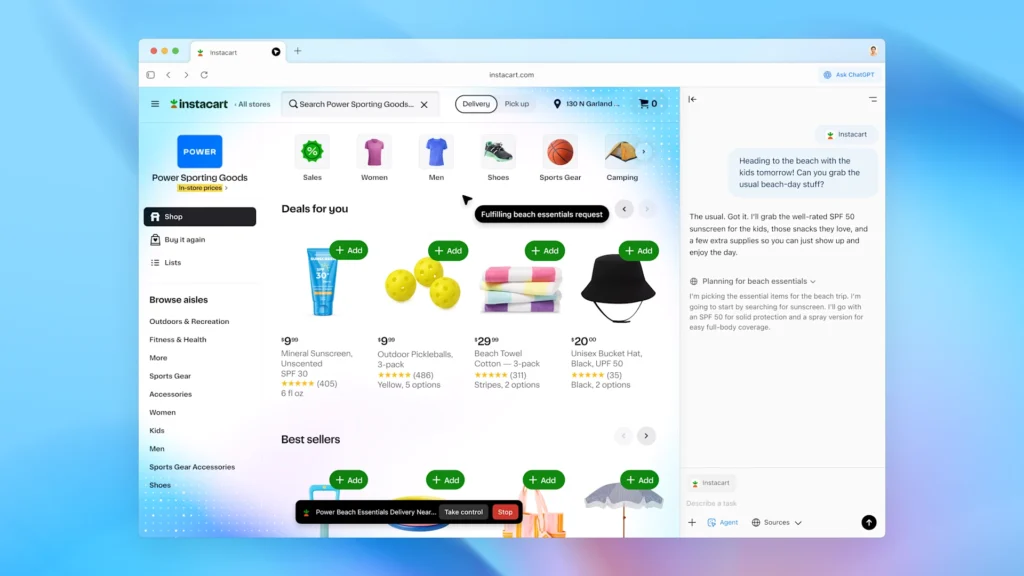
Atlas listens, reasons, and acts. You can talk to it the same way you’d talk to a colleague who’s already done their research. It can find information, interpret it, and then actually do something with it.
- Conversation replaces search. You describe what you’re trying to do, and Atlas figures out what to look for instead of making you guess the right keywords.
- Real-world capability. Atlas can interact with the web on your behalf, checking prices, pulling data, or verifying details in real time. It doesn’t just read the internet; it uses it.
- Context that carries forward. Each request builds on the last. It remembers what you’re working toward, not just what you typed.
- Summaries that think critically. When Atlas surfaces information, it explains the reasoning behind it and highlights the credibility of its sources.
- Guided exploration. You can push the conversation further, asking for trends, comparisons, or expert perspectives without starting from scratch.
Atlas feels less like a search engine and more like a capable partner that understands your intent and can take action when needed.
Your Traditional SEO Playbook? Time for a Bonfire
Remember when SEO meant stuffing keywords everywhere and building sketchy backlinks? Those days were already fading, but AI-driven discovery just signed the death certificate.
The Old Way
- Create 50 pages targeting slight keyword variations
- Obsess over keyword density percentages
- Build links from anywhere that would take them
- Write for Google’s algorithm first, humans second
The Atlas Way
- Create comprehensive resources that actually answer questions
- Write like you’re explaining something to a smart friend
- Build genuine authority through depth and expertise
- Focus on being genuinely useful (radical concept, right?)
The shift is simple but transformative. AI systems are trained on human communication, not SEO gibberish. They prefer content that sounds like it was written by an expert having a conversation, not a keyword-stuffing robot.
Make Atlas Fall in Love With Your Content
Let’s get practical. Here’s how to optimize for Atlas and its AI cousins without losing your mind.
Write Like a Human, Structure Like a Genius
Your content needs to be scannable by both humans and machines. AI systems are getting remarkably good at understanding context, so your structure needs to make logical sense, not just look polished.
Do this:
- Start with a clear, compelling summary in your first paragraph
- Use headings that actually describe what’s below them
- Create a logical flow that builds understanding step by step
- Write transitions that connect ideas naturally
Avoid this:
- Keyword-stuffed headings that make no sense
- Jumping randomly between topics
- Burying the lead under fluff
- Writing like a technical manual when explaining simple concepts
Schema Markup: Your Secret Handshake with AI
Schema markup is like leaving detailed notes for AI systems about what your content actually means. While Atlas doesn’t depend on it like Google does, it still helps.
High-impact schema types to implement:
- Article schema – For blog posts and news content
- FAQ schema – For question-and-answer sections
- Person/Organization – For author credibility
- HowTo schema – For instructional content
- Product schema – For e-commerce pages
Marketer tip: Include author information and credentials in your schema. AI systems are increasingly trained to evaluate source credibility, and they’re getting better at spotting the difference between “some random blog” and “actual expert opinion.” It’s time to relearn how to cite.
The Internal Linking Web That Actually Makes Sense
Forget internal linking for the sake of SEO magic. Atlas wants to understand how your ideas connect, like following a trail of breadcrumbs through your expertise.
Smart internal linking strategies:
- Build topic clusters around core expertise areas
- Link to provide additional context, not just for link equity
- Create clear pathways from broad topics to specific details
- Use descriptive anchor text that explains the connection
If an AI system is trying to understand your site’s expertise on sustainable farming, it should be able to follow links from your overview page to specific techniques, case studies, and related topics while understanding why these connections matter.
Speed, Access, and the Technical Stuff That Still Matters
While Atlas cares more about understanding than traditional SEO, you still need to make your content accessible.
Technical essentials:
- Fast load times – Because even AI crawlers have better things to do than wait
- Mobile responsiveness – It’s 2025, this should be a given
- No content hiding – Avoid JavaScript-heavy setups that block your best material
- Clean URL structures – Make it obvious what each page is about
- Proper robots.txt – Don’t accidentally block the AI revolution from your door
What KPIs Will Matter Most?
Traditional metrics like keyword rankings won’t tell the full story anymore. You’ll need to track new signals alongside the old ones.
Traditional metrics (still relevant):
- Organic search traffic
- Keyword rankings
- Click-through rates
- Bounce rates
New AI-era metrics:
- References in AI-generated content
- Traffic from AI applications and chat interfaces
- Brand mentions without direct links
- Engagement depth (time on page, scroll depth, return visitors)
- Content shares and saves (if humans share it, AI will value it too)
Some of these are hard to track directly, so you may need to get creative with monitoring brand mentions and identifying new referral patterns.
What You Can Implement Now
Ready to optimize for Atlas? Use this checklist to strengthen your content and technical foundation:
- Page has a clear, descriptive title and first paragraph summarizing the core content
- Proper heading hierarchy (H1, H2, H3) that guides readers and crawlers logically
- Schema markup for relevant content types (Article, FAQ, Product, etc.)
- No major content blocked from crawlers (avoid heavy JS or gated login pages)
- Internal linking that creates logical content paths from summaries to details
- Comparison or decision-help sections where relevant to purchasing or choice
- Clear writing that favors simplicity over jargon
- Fast, mobile-friendly pages that load efficiently
- Author and source information included for credibility
- Regular analytics review to spot new referral or AI-driven traffic sources
What This Means for Your Website’s Future
OpenAI’s Atlas signals a new era where quality beats tricks. Sites that provide genuine value will win, while those relying on manipulation will lose visibility.
The best part? Optimizing for Atlas also means creating better content for humans. Focus on being useful, structured, and credible. Build content that demonstrates real expertise and helps people solve problems.
The websites that will thrive are the ones built to succeed in a world where quality actually matters. Start optimizing for that future now.