
Ever listen to a podcast and think, Wow, they make it sound so effortless? I could listen to them talk for hours.
Behind those fluid, funny, or thought-provoking conversations is a quiet, well-built framework that balances structure with spontaneity. So, what’s the real difference between a show with a handful of listeners and one with millions of downloads?
Top hosts aren’t just hitting “record” and hoping for the best. They spend two to three hours developing a script for every single hour of recording. That kind of preparation turns casual chatting into something you cannot stop listening to.
Why Do I Even Need a Script?!
A good script is like a roadmap. It does not lock you into robotic delivery, it helps you stay on track while leaving room for authentic moments. You should know exactly what you want to deliver in each episode, then structure the conversation so listeners stay engaged from start to finish.
Once you understand why a script matters, the next step is figuring out how to put one together. And here’s the good news: you do not have to guess. Let’s walk through some of the most important pieces to have in your podcast script.
The Four-Part Structure That Hooks Listeners

1. Start Strong With a Hook
You have less than 30 seconds to grab someone’s attention. Try one of these:
- Teaser: “By the end of today’s episode, you will know the three-step system that helped our guest build a $10 million company.”
- Problem Statement: “If you have ever struggled with [specific issue], today’s conversation will change everything.”
- Bold Claim: “What I am about to share flips what you have been taught about [topic].”
- Story Opening: “Three months ago, [guest name] was facing bankruptcy. Today, they run a seven-figure business.”
2. Introduce With Purpose
Successful hosts keep intros short:
- Welcome listeners and name the show.
- Introduce yourself and why you are worth listening to.
- Tease the topic and why it matters.
- Introduce the guest with a quick credibility hook (if there is one).
- Set expectations for length and format.
3. Organize the Main Content
Follow the “Rule of Three”:
- The problem or challenge.
- The solution or insight.
- The action step or implementation.
Within each point:
- Make it clear.
- Share a quick story or example.
- Explain why it matters to the listener.
4. Close With Intention
Do not fade out. End with:
- A quick recap of main takeaways.
- A call to action (subscribe, share, try something).
- A thank-you to the guest.
- A teaser for the next episode.
Once you have the structure down, you can start shaping it into a repeatable format. These quick templates make it easy to plan each episode without starting from scratch every time.
Quick Script Templates
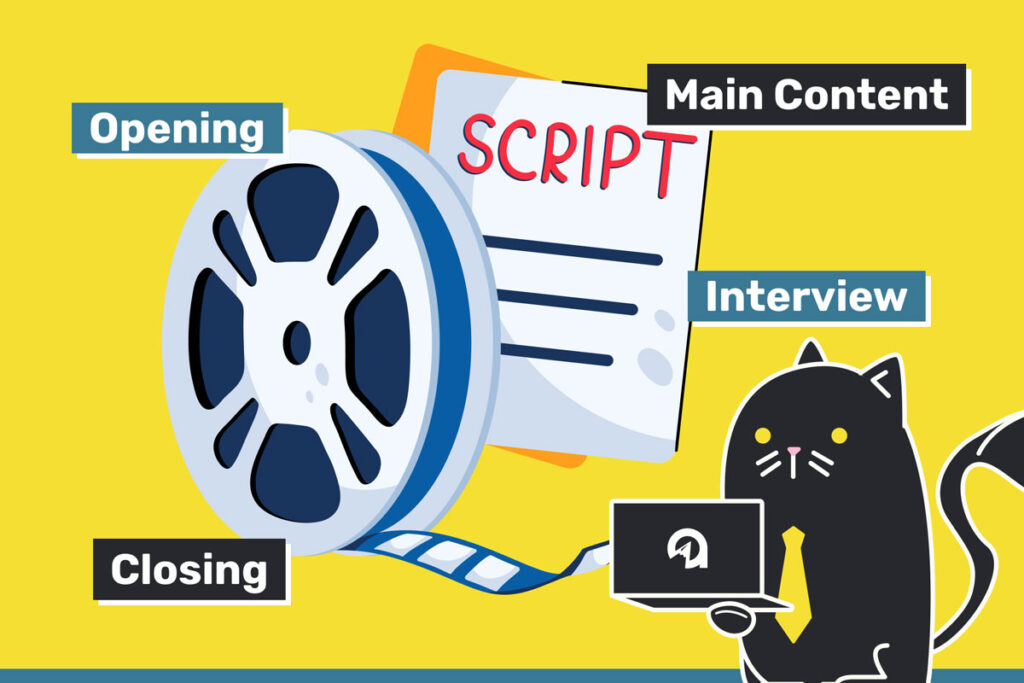
Solo Episode
- Opening (2 min): Hook, welcome, preview.
- Main Content (15–20 min):
- Introduce the problem.
- Share your experience or research.
- Give your solution or framework.
- Provide a real-world example.
- Closing (3 min): Recap, call to action, preview next episode.
Interview Episode
- Opening (2 min): Hook, guest intro, topic preview.
- Interview (20–30 min): Background, challenge, solution, results, lessons, advice.
- Closing (3 min): Thank guest, promote their work, call to action.
Structure is only half the equation. The other half is how you bring it to life – the delivery, the pacing, and the way you connect with your audience. These tips will help you keep listeners engaged from the first word to the last.
Tips for Writing Scripts That Keep People Listening

Talk About What Your Audience Wants to Hear
- Don’t just talk about yourself. Solve problems your audience is interested in.
- Know the problems your audience is trying to solve right now.
- Answer the questions they keep asking you.
- Pick topics that are trending or relevant in their world.
- Share stories that make them feel understood and connected.
- Offer tips or solutions they can use immediately after listening.
Write Like You Talk
- Use contractions (don’t, can’t).
- Add a few natural filler words (well, you know).
- Break grammar rules if it makes you sound real.
- Use “I,” “you,” and “we” to build connection.
Plan Your Timing
- Introduction: 10 percent of total episode.
- Main content: 80 percent.
- Conclusion: 10 percent.
- Mark natural pause points for editing.
Make Transitions Flow
- “That reminds me of…”
- “Speaking of…”
- “Here is what is interesting about that…”
How Long Should I Devote to Each Episode?
If you are wondering how much time to spend preparing each episode, here is a workflow.
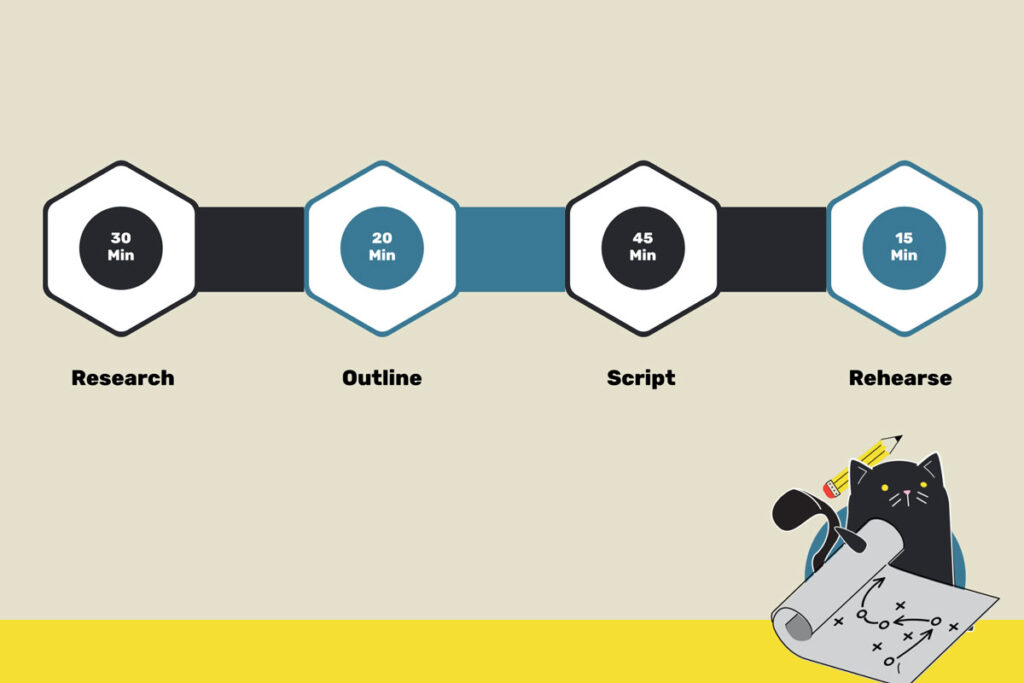
- Research (30 min): Choose your 3–5 main points, collect stats, stories, and guest background.
- Outline (20 min): Write your hook, order your points, plan transitions, and draft your conclusion.
- Script (45 min): Expand into full talking points with timing notes and emphasis cues.
- Rehearse (15 min): Read aloud, check pacing, fix awkward spots.
Do’s and Don’ts of Podcast Scripting
Do:
- Keep it conversational.
- Use stories to make points stick.
- Plan your hook first.
- Time your segments.
- Leave space for natural reactions.
- End with a clear action step.
Don’t:
- Write every word for an interview.
- Use jargon without explaining it.
- Overload episodes with too many topics.
- Start with a long backstory.
- End without a recap.
Want Some Professional Help With Your Podcast?
Some podcasters also work with marketing agencies to shape their scripts and integrate them into a bigger content strategy. The goal of creating episodes that sound natural, keep listeners hooked, and drive real results is the same, whether you go it alone or bring in help.
If you’d like some assistance bringing your podcast to fruition, we can help!